
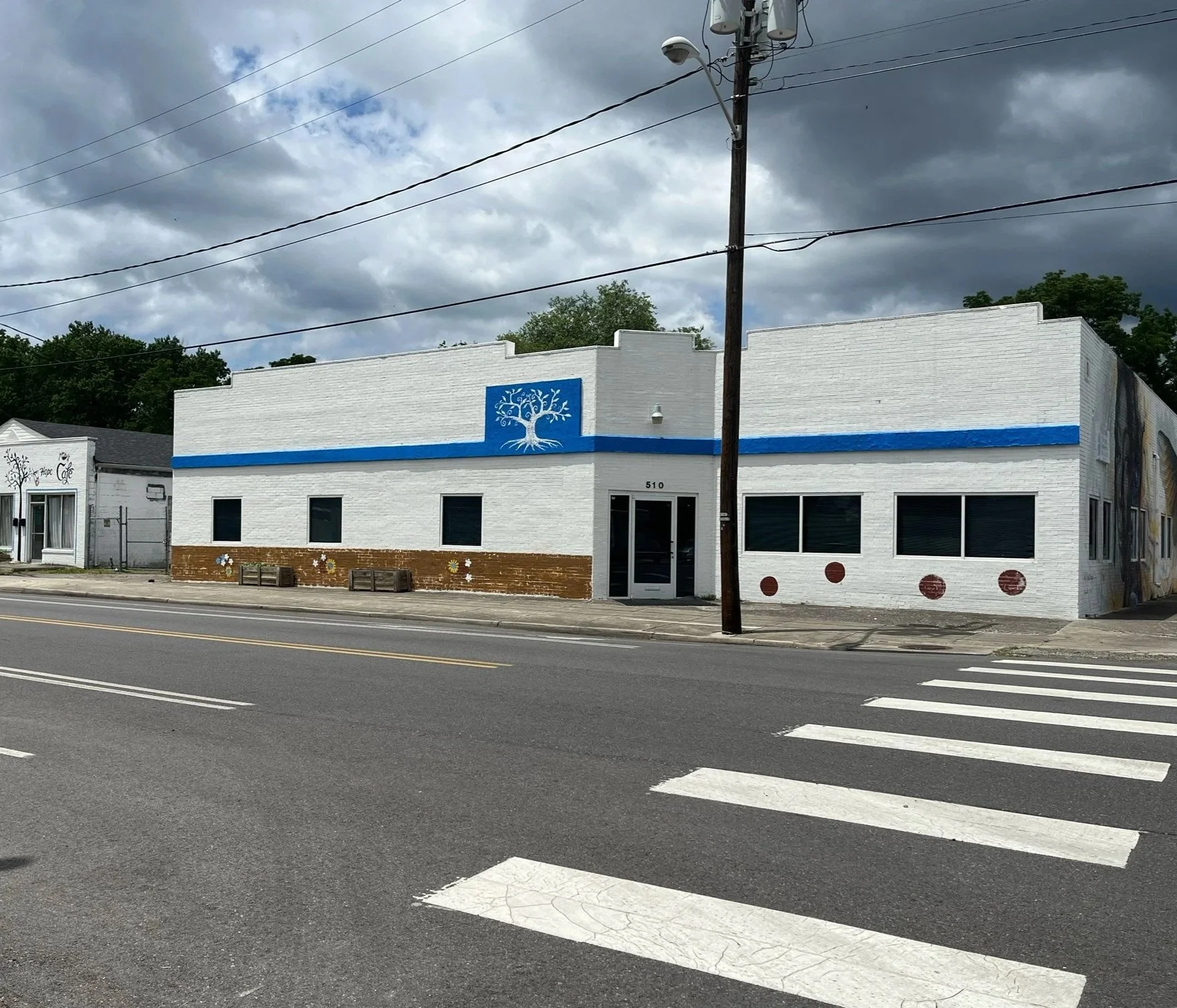
Renewing The Hope Center
More Space, More Function, More Options
The Hope Center is a deeply rooted non-profit organization that provides many everyday services including after-school art and dance programs, safe space for homework and tutoring, as well as clothing racks and basic necessities such as food and water for those in need. It also serves the community in times of emergency, for example as a cooling station during extreme heat events or as a central hub to disperse donated emergency supplies.
Though the Center provides an impressive amount of services within a very small space, The Hope Center was in talks with the landlord of a larger space next door during our design phase that would allow for expanded programming and better serve its community in times of crisis.
Farr Associates led the consultant team in a passive resilience study, and a conceptual design and cost analysis for a new Community Resilience Hub and renovated Hope Center, helping them envision a bold new plan as they navigated their transition to a new space.
The thoughtful approach to a phased implementation one floor at a time looks to maximize efficiency and resources in the context of the final finished product. This type of groundwork and design thinking feeds into many of Farr Associates' "master planning for building" projects.
Client: Climate Resilience Consulting, LLC
Location: Roanoke, VA
Role: Technical Assistance, Architectural Consultant
Project Area: 15,000 sf
Project Completion: 2024
-
JMT: MEP Engineering
Virginia Tech University: Grant Partner
The Hope Center: Grant Collaborator
Site Plan
Zoning Analysis for Commercial Corridor Development
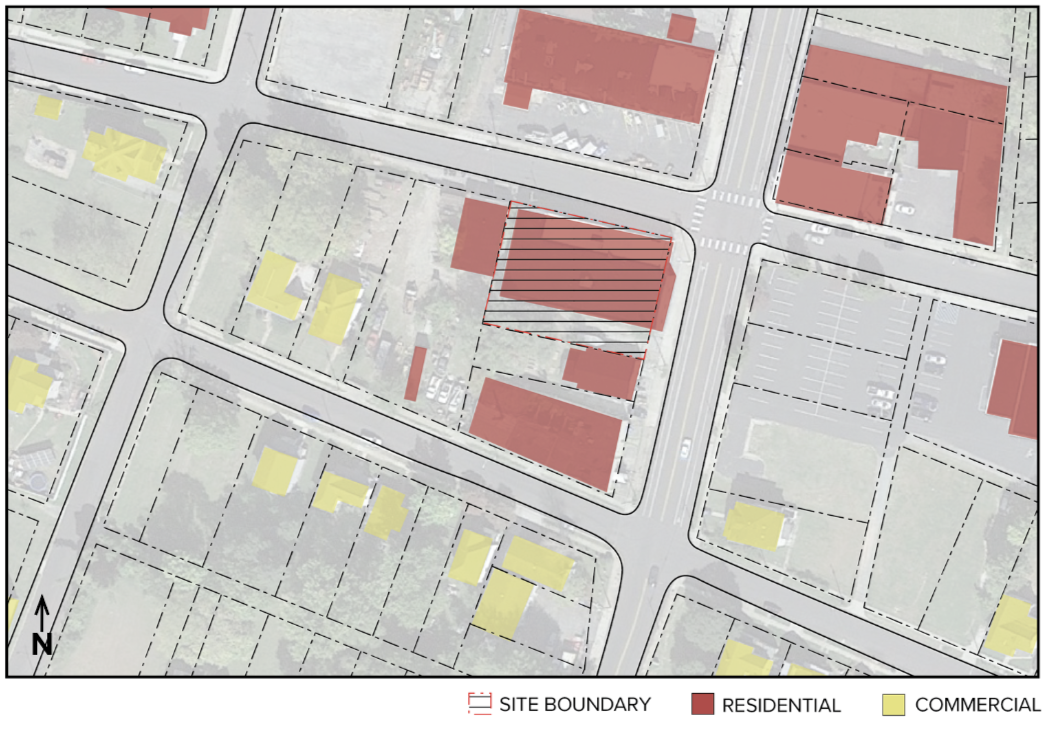
The proposed design looks at the existing building on the corner lot on Moorman Street NW and 11th Street NW. The cinder block building will be upgraded with new interior insulation and completely reconfigured. Significant structural shoring and foundation work will allow for the addition of a second story and future roof deck build-out.
Master Plan
Phasing the Renovation & Proposed Addition

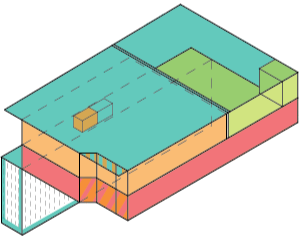
Massing Diagram
Existing Building & Proposed Addition
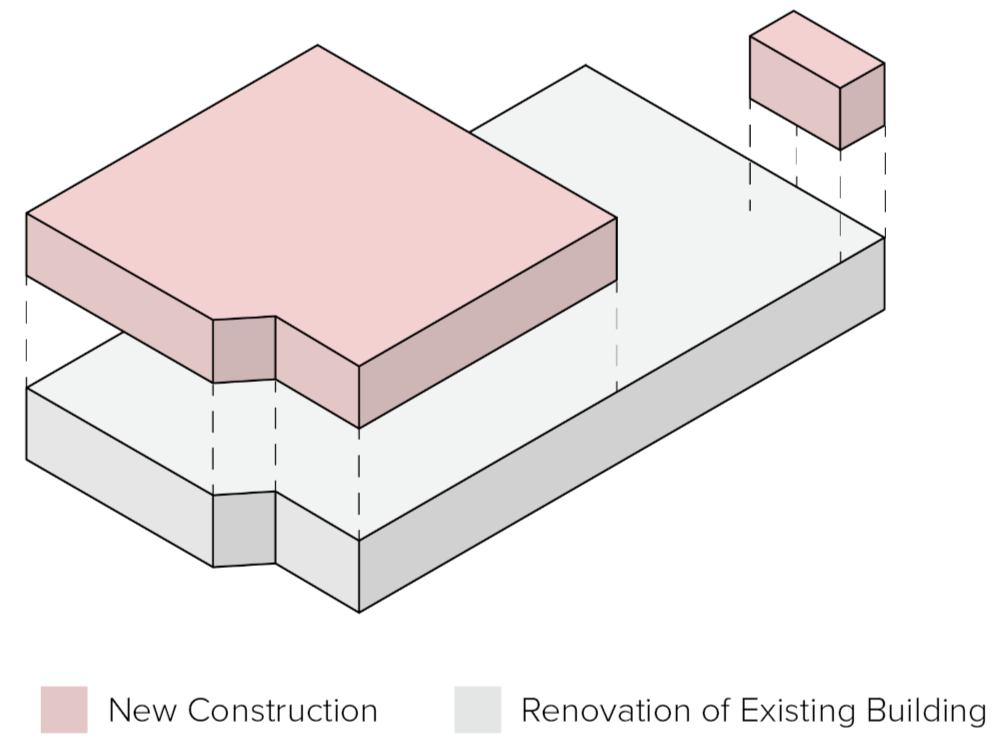
The addition of a second story takes into account the need to serve a wider section of the Northwest Roanoke community. The second story is an extension of the 11th Street NW façade, making the building’s presence on the street more prominent.
With office spaces and classrooms located on the second floor, this expansion will serve youth in after school programs, adult education programs, and job training alike. It also provides necessary space for Hope Center staff and counseling offices.
-
A Welcoming, Secure Vestibule
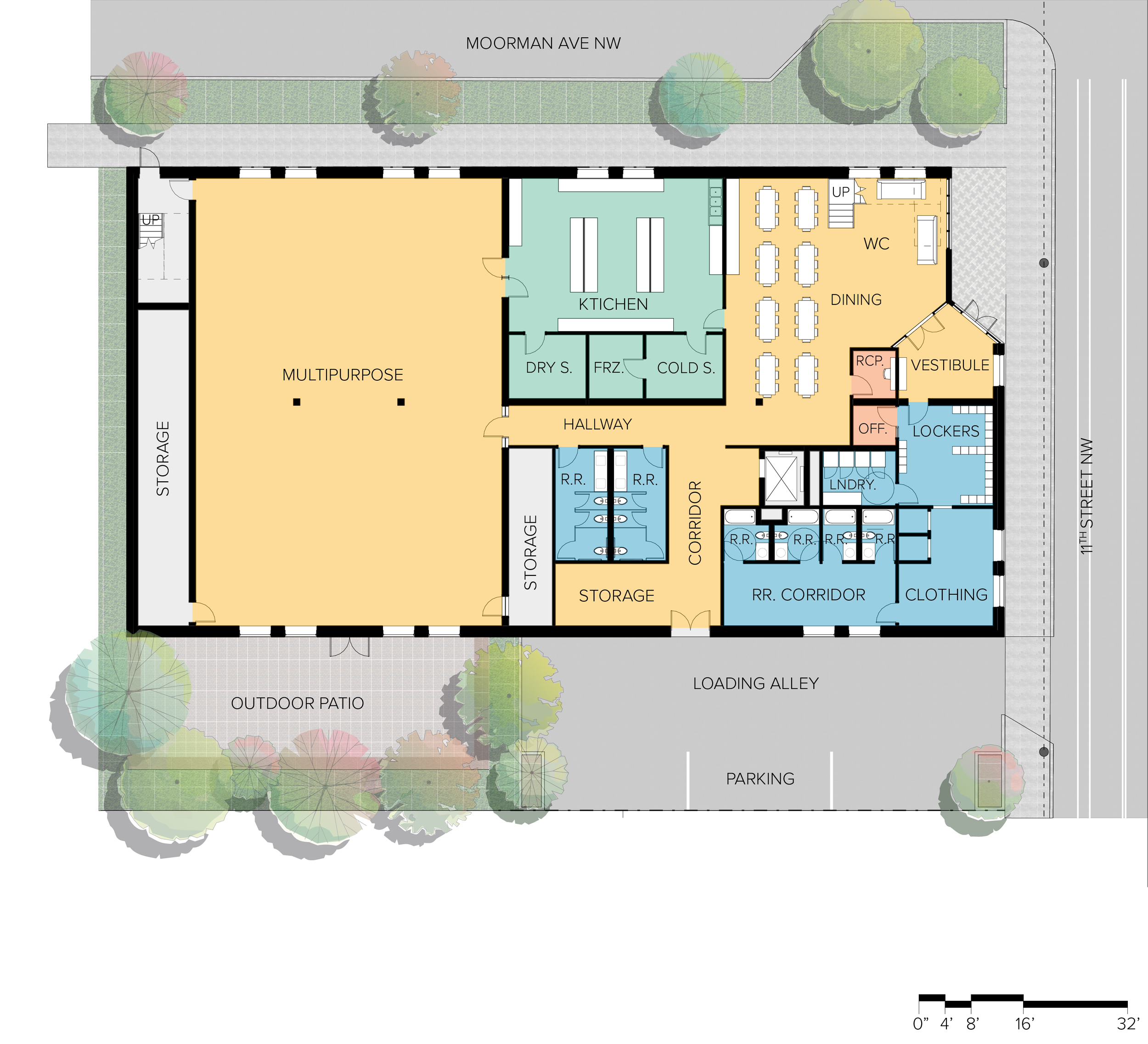
The first floor of the Hope Center features a secure vestibule to accommodate all potential users of the building. Visitors may proceed to the transition space with lockers, a clothing boutique with donated clothes, showers, and laundry facility. Or proceed opposite to the dining room and grand stair, the multi-purpose room, and kitchen.
-

Second Floor Addition Expands Use
The second story features additional programming space complimentary to the Hope Center's mission and every day services and operation, including classrooms, a computer lab, conference room/overflow meeting space, and an office suite. Adjacent to the freight elevator is a room for solar batteries, drawing and reserving power from the rooftop solar array.
-

Green Roof Provides Year-Round Relief
The rooftop is an active building surface, featuring a low-profile green roof tray system under a solar canopy. The green roof helps keep the building warm or cool in respective winter or summer seasons, while preventing excess heat from being trapped under the solar panels. Space is allocated for necessary rooftop mechanical units and an elevator overrun.
-

Elevations: Primary Façades
Building elevations show a view of the two primary façades from 11th Street NW (East Elevation) and Moorman Ave NW (North Elevation). The addition preserves the building’s character, with a reconfiguration of the main entrance, new illuminated monument signage, and a transparent public entrance.
-

Elevations: Secondary Façades
The South Elevation is adjacent to dedicated parking and loading/unloading space, and the outdoor terrace with a landscape buffer between the two. The west façade abuts the property line and therefore does not have windows. Should a building be built on the lot west of the Hope Center, it would not impact views or daylighting in any way.